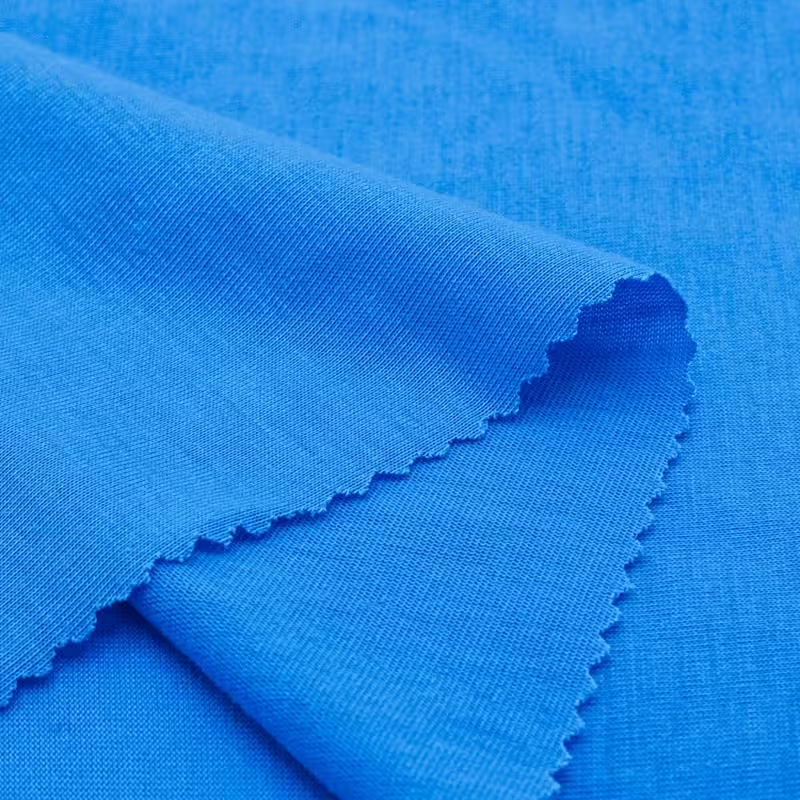
Choosing fabric for bulk custom T-shirts in India comes down to matching three things: how the shirt will be worn, how it will be printed, and what your budget per piece allows. Cotton gives the softest everyday feel and the brightest prints, polyester handles sweat and repeated washing, and blends sit in between on cost and durability. Get that match right and most of the order falls into place on its own.
Why Does Fabric Choice Matter So Much for Bulk T-Shirts in India?
One shirt in the wrong fabric is a small mistake. Two hundred shirts in the wrong fabric is a warehouse full of them. Fabric decides comfort in Indian heat, how the print settles, how the garment behaves after ten washes, and what each piece costs you.
The climate does most of the deciding. Hot, humid months make breathability matter more than almost any other feature. A shirt that feels sticky by noon will not get worn twice, and branded apparel only earns its keep when people actually reach for it.
What Should You Check Before Comparing Fabrics?
Two words show up on every fabric spec sheet, and both are easy to understand.
Weight is how heavy the fabric feels, usually quoted as GSM in India. Lighter fabric drapes softly and suits retail-style tees. Heavier fabric holds its shape, resists see-through issues under large prints, and survives more washes on work crews. There is no single correct weight, it depends on the job.
Yarn quality is often described by singles. A higher singles number means a finer, smoother yarn, which is why two cotton tees at the same weight can feel completely different in the hand.
Also ask whether the fabric is pre-shrunk, and whether the cotton is combed or carded. Single jersey is the standard knit for a basic tee.
When Is 100% Cotton the Right Pick?
Cotton is the default for a reason. It breathes, feels soft against skin, and takes ink beautifully, so screen printing and DTG on cotton give the sharpest, most vibrant results. Being a natural fibre, it also suits people with sensitive skin.
Where cotton struggles: it can shrink and fade after repeated washing, and it feels a little heavier than polyester at the same weight. Pre-shrunk fabric reduces the shrinkage problem, so ask about it before confirming a bulk order.
Cotton is breathable and soft, and that combination is hard to beat for daily wear in most Indian cities. The usual cotton use cases:
- Everyday brand tees and casual drops
- College fests, society events and family orders
- Staff uniforms for indoor, air-conditioned workplaces
- Orders where print vibrancy is the hero
When Does Polyester Win?
Polyester is the performance pick. It wicks moisture away from the body, dries fast, and resists wrinkles, shrinking and fading. If the order is heading to a marathon, a gym, a cricket team or an outdoor crew, polyester will outlast cotton comfortably.

It is also the fabric that makes all-over print shine. Sublimation and direct disperse printing on polyester give deep, edge-to-edge colour that cotton cannot match. AOP leggings, sports bras and team jerseys usually start here.
The trade-off is feel. Polyester can cling in non-active settings and does not breathe as well as cotton when you are sitting still. Some buyers also find it less premium for gifting.
What About Cotton-Polyester Blends?
Blends exist to settle the cotton versus polyester argument. A typical 60/40 cotton-polyester mix keeps cotton's softness while borrowing polyester's durability, so the shirt shrinks less and holds its shape through weekly washing. For large uniform orders, that consistency matters a lot.
Blends print well too. Screen printing and digital printing both work, and the per-piece cost usually lands lower than pure cotton at volume. The compromise is feel: a blend rarely matches good combed cotton, and sublimation on a blend is not as sharp as on 100% polyester.
There is a softer end to this family. CVC blends carry a higher cotton share, and tri-blends add rayon for a broken-in, vintage drape. Both work nicely for brand merch where hand feel is what sells the shirt.
How Does Fabric Choice Affect Printing?
Fabric and print method have to be picked together. Choose them separately and you end up with cracked prints or dull colour.
| Fabric | Comfort in Indian heat | Best print methods | Watch out for |
|---|---|---|---|
| 100% cotton | Excellent, very breathable | Screen print, DTG, DTF | Shrinkage, fading |
| 100% polyester | Good for active wear | Sublimation, disperse AOP, DTF | Clingy when idle |
| Cotton-polyester blend | Good | Screen print, DTG, DTF | Sublimation looks softer |
Printing method compatibility varies by fabric, so check the pairing before you lock a method in. A cotton-rich shirt suits direct-to-garment and screen work, while polyester opens up sublimation and full all-over coverage. If you are weighing methods for a smaller first run, this breakdown of DTG, DTF and screen print for small batches is a good next read.
Oowia prints across DTG, DTF, all-over print on cotton and polyester, vinyl, puff, screen, HD and glow-in-the-dark, so the fabric conversation usually starts with your design rather than the machine list.
Which Fabric Suits Which Buyer?
The right answer changes with who is ordering and why.
- First-time fashion designer: start with mid-weight cotton for your debut tee drop. It photographs well, feels familiar to customers and is easy to reorder.
- Instagram creator building a B2C brand: cotton for everyday drops, polyester for AOP pieces such as leggings and crop tops where stretch and colour depth matter.
- B2B buyer ordering staff uniforms: blends or polyester for teams that wash uniforms every week and need every piece to look identical months later. This checklist for ordering custom printed staff uniforms in bulk covers the cost factors.
- Dealer or wholesaler buying for resale: blends give you a price point that moves quickly, with cotton reserved for the premium tier. Run the numbers with this margin checklist for pricing print-on-demand T-shirts for resale.
- Working professional running a side hustle: one fabric, one style, small runs. A cotton tee is the simplest place to begin.
Why Does In-House Manufacturing Change the Fabric Conversation?
Most POD suppliers buy fabric in one place, print in another and stitch somewhere else. Shade variation and sizing drift creep in at those handoffs, and that is exactly what bulk buyers complain about after the second order.
Oowia handles knitting, dyeing, printing and garmenting under one roof, backed by Ambuja Knitting Mills, a knitted fabric manufacturer with 70 years behind it. Since the fabric is made in the same facility where it gets printed and stitched, a reorder matches the first order far more closely.
That setup widens your options too. Fabric types, colours, sizes and print methods can be combined within one order, and everything ships as a single parcel rather than three. For buyers with real volume, specific requests such as linen-based single jersey or pure silk single jersey can be manufactured instead of turned down.
How Do You Test Fabric Before Committing to Bulk?
Order a sample in the exact fabric, colour and print method you plan to use. Then put it through a real week.
- Wear it for a full day in Indian summer heat and note where it feels sticky.
- Wash it the way your customers will and check for shrinkage and fading.
- Inspect the print after washing for cracking, dulling or lifted edges.
- Compare two sizes side by side to catch sizing drift early.
- Check shade consistency if you ordered more than one piece.
Before approving the full run, work through this checklist for checking print quality on a sample. It takes twenty minutes and saves a lot of awkward emails.
Frequently Asked Questions
Which fabric is best for custom T-shirts in Indian summer? Cotton, for most people. It breathes better than polyester when you are not moving, which covers everyday and office wear.
Is polyester uncomfortable for daily wear? It can feel clingy and warm when you are sitting still. For sportswear and outdoor work, it is the better pick.
Do cotton-polyester blends shrink? Far less than 100% cotton. The polyester content helps the shirt hold its shape through repeated washing.
Can I test a fabric without a big order? Yes. Minimum order quantities can go as low as one unit, so a small trial is possible. Products such as the Men's Premium Cotton T-Shirt, ₹159 or the All Over Printed T-Shirt, ₹388 make low-risk first runs easy, and the Men's Oversized T-Shirt, ₹249 covers the relaxed-fit trend without a separate supplier.
The Takeaway
Cotton for comfort and print vibrancy. Polyester for performance and all-over colour. Blends for bulk value and consistency across a large order. Pick the fabric around how the shirt will actually be worn, print it with a method that suits the fibre, and test one piece before you commit to hundreds.
Because Oowia controls fabric, print and stitching in one facility, the shirt you approve as a sample is the shirt your customers receive in bulk. That is the part most first-time buyers underestimate.
