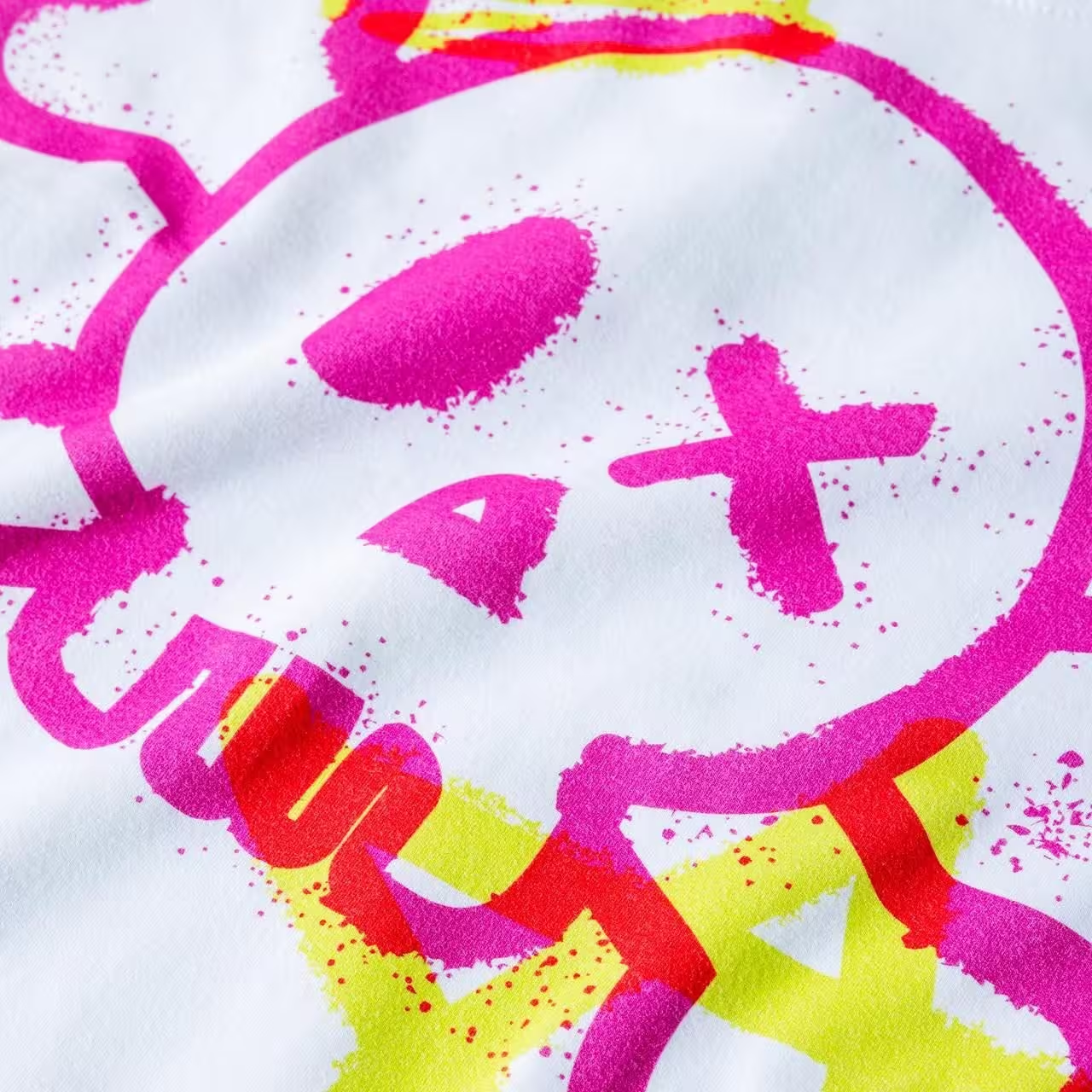
All over print (AOP) covers a garment from edge to edge with your design, and the fabric underneath decides how bright, soft, and long-lasting that print turns out. Polyester gives you vivid, durable colour through sublimation, while cotton gives you a softer, more familiar feel through direct-to-fabric printing. For Indian custom apparel brands, the right pick comes down to what you are making and who is wearing it.
What is all over print, and why does the fabric matter?
All over print means your artwork runs across the whole garment, from sleeve to sleeve and hem to hem, with no plain border left behind. It is usually built through cut-and-sew construction, where the design is printed onto fabric panels first, and those panels are then cut and stitched into the finished piece.
The fabric underneath changes everything. The same design can look punchy and sharp on one cloth and slightly muted on another, because each fibre takes ink differently. Two brands can upload the exact same file and still get very different results.
How does sublimation on polyester actually work?
Sublimation turns solid dye into a gas under heat and pressure, and that gas bonds straight into the polyester fibre. There is no ink sitting on top of the surface, so the print cannot peel, flake, or crack. It also survives repeated machine washing without fading the way surface prints do.
The trade-off is chemical. Sublimation dye only bonds to polyester, so on cotton it has nothing to hold onto and the colour washes out fast. That is why classic all over print has always lived in the polyester world.
For dependable sublimation the cloth needs to be mostly polyester, and the higher the synthetic content, the better the colour holds. One clear breakdown of the process explains why the dye becomes part of the fibre itself.
What about direct-to-fabric printing on cotton?
Direct-to-fabric printing (sometimes called digital fabric printing) applies reactive dye or pigment ink straight onto cotton using large-format inkjet-style machinery. It works on natural fibres where sublimation cannot, which is how cotton all over print became a real option at all.
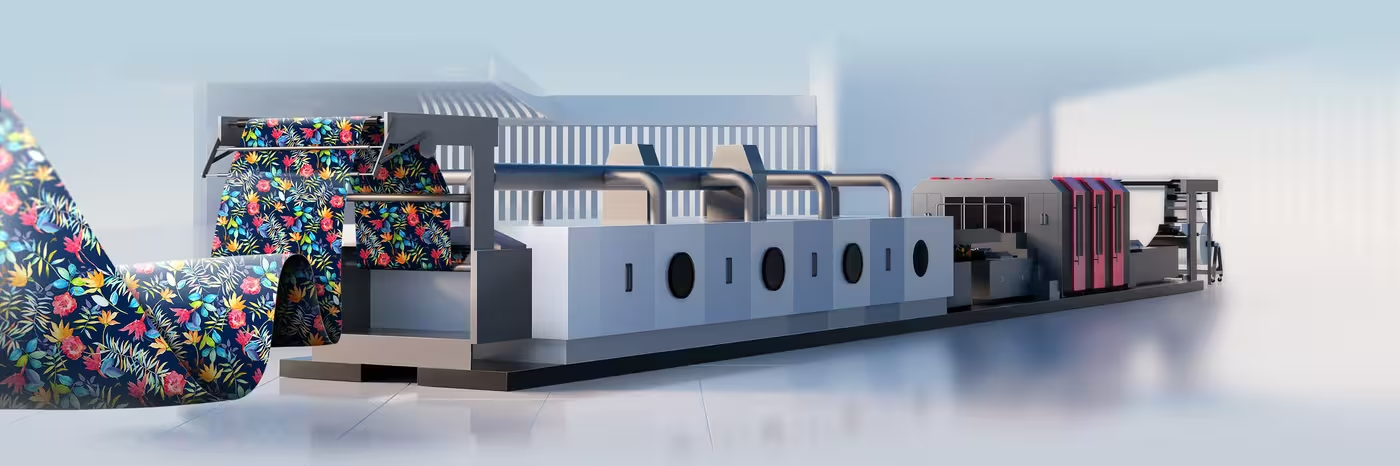
The result is a soft handfeel and a natural matte finish that plenty of buyers genuinely prefer. The honest catch is that colour saturation runs lower, and long-term wash durability is generally softer than sublimation over many cycles. If you want the cotton feel without full coverage, placement printing on a blank cotton tee stays the most predictable route, and our guide to DTG vs DTF vs screen printing breaks down those methods.
How do the two prints compare side by side?
Here is the practical split most brands care about:
| Factor | Polyester (sublimation) | Cotton (direct-to-fabric) |
|---|---|---|
| Colour vibrancy | Very high, bright against white | Softer, sometimes slightly muted |
| Print durability | Dye bonded into fibre, no cracking | Lower wash-fastness over time |
| Handfeel | Smooth, less soft on skin | Soft, familiar cotton feel |
| Moisture | Wicks sweat, great for sport | Absorbs and holds moisture |
A few points stand out. Polyester wins on colour punch and longevity, which is why photographic designs with deep blacks and fine gradients render more faithfully on it. Cotton wins on comfort, and designs with a vintage, washed, or illustrative look often sit beautifully at moderate saturation.
Neither fabric is simply better, and the gap between them keeps narrowing as cotton printing tech improves. If you are still weighing up the basics, our post on choosing fabric for bulk custom t-shirts goes deeper.
Which fabric suits which product?
Match the cloth to the job and half your decisions are already made:
- Activewear, swimwear, and sports kit: polyester sublimation, easily. Cotton soaks up sweat and loses shape when wet, and the print has to survive chlorine and salt water.
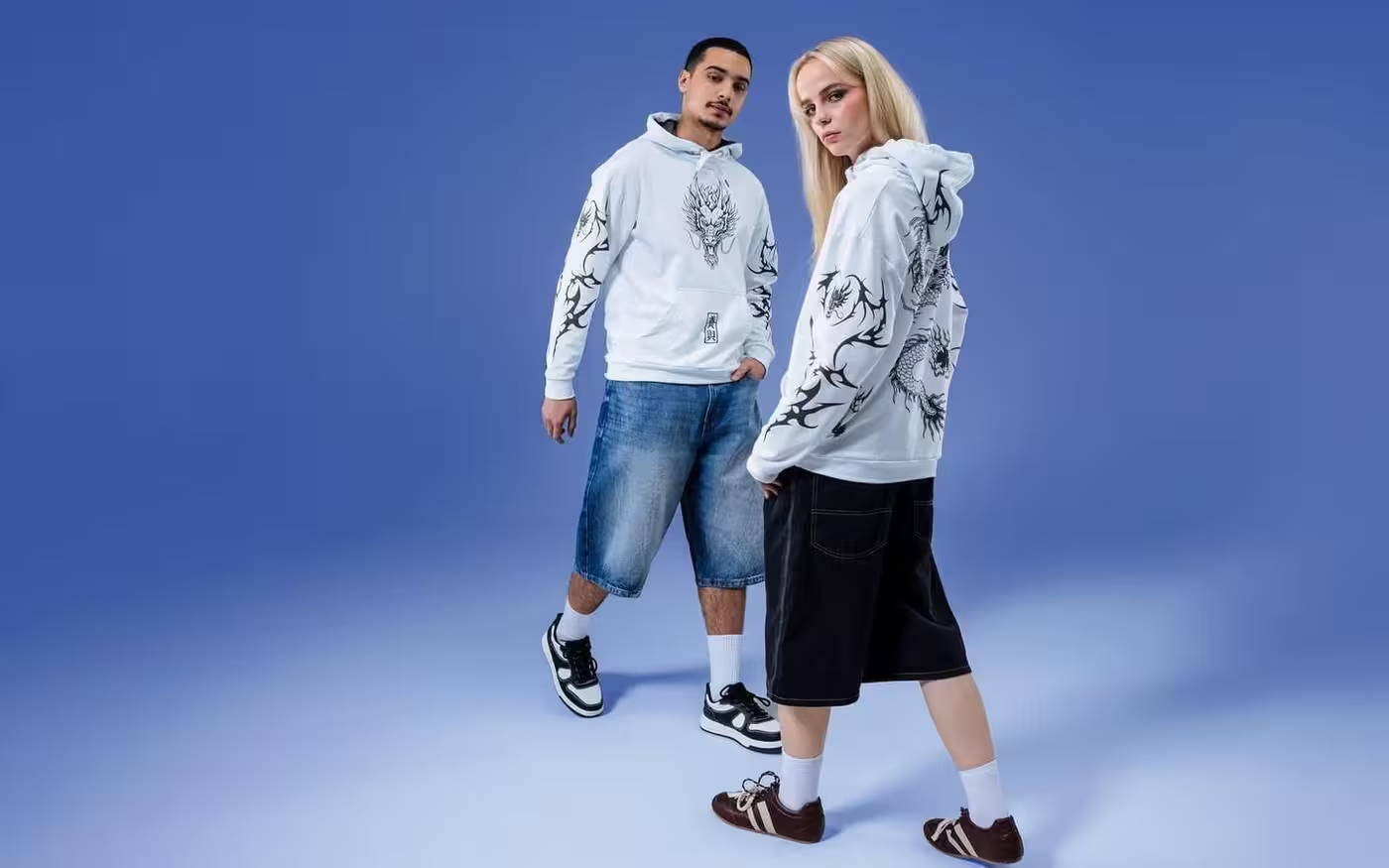
- Casual everyday tees and streetwear: this is where cotton earns its place, especially if your customers care about handfeel and drape. An All Over Printed T-Shirt, ₹388 is a common starting point.
- Hoodies and fleece: most all over print fleece uses a polyester-rich blend, like our AOP Sweatshirt, ₹578.
- Kids and youth wear: parents lean towards cotton for comfort, so check wash-fastness before committing, since children's clothes get washed far more often.
Does fabric weight change the result?
Yes, and it affects both print quality and how the garment wears. Lighter cloth is common for performance tees and polos, while heavier cloth shows up in fleece and structured lines. On cotton specifically, a denser, heavier weave tends to hold dye more evenly, and very lightweight cotton can show streaking or uneven saturation.
Heavier fabric also holds shape better around seams and stress points, which matters at shoulder seams and pocket edges where cloth is folded and stitched under tension. Keep this in mind when you pick a blank for a design loaded with fine detail, and always judge the weight in person on a sample.
What about blends, sustainability, and cost?
Blends look like an easy middle ground, and to a point they are. Sublimation only bonds to the polyester portion of a blend, so on a 60/40 poly-cotton cloth a large chunk of the print refuses the dye and looks washed out. For dependable sublimation you want the fabric to be mostly polyester.
On sustainability, neither fabric wins cleanly. Virgin polyester carries a real footprint, recycled polyester (rPET) uses less energy and water, and conventional cotton is water-intensive while organic cotton costs more. The honest move is to check the exact composition your supplier uses rather than trusting the label. Cost at scale usually favours polyester, which is one big reason it dominates printed activewear.
How do you get your artwork ready for all over print?
Good files make good prints, and all over print is fussier than a small chest logo:
- Use high-resolution artwork, at least 150 DPI at full print size, saved as a PNG with a transparent background in sRGB.
- Extend the design to cover the whole template, because any blank area prints as bare, unprinted cloth.
- Keep logos and key text inside safe zones, away from seams, edges, and panel transitions.
- Avoid extremely fine lines and complex gradients, since cotton's texture can soften small details.
Remember that a little of your print disappears into every seam allowance, so colour-matched stitching helps the design blend. This collection guide lays out the same file checks in more detail if you are new to full-coverage printing.
Is cotton all over print good enough for a first drop?
For a first drop, cotton all over print is a fair choice if your brand is built around comfort and a soft, matte, slightly vintage look. Just set the expectation with your customers that colours will read a touch softer than a polyester piece. If your hero design is a bold photograph with deep blacks, test polyester first and compare a sample of each before you commit to a full run. Whichever way you lean, a physical sample beats any mockup on screen.
The takeaway
Pick polyester when you want bright, durable, wash-tough prints for activewear and photographic designs. Pick cotton when comfort and that natural matte feel matter more to your customer than maximum colour punch. Both are strong choices for an Indian apparel brand, and because Oowia is owned by a 70-year-old knitted fabric manufacturer and handles knitting, dyeing, printing, and stitching under one roof, you get consistent colour and quicker turnaround whichever way you go. Order a sample in both fabrics, hold them up to the light, and let the cloth make the final call.
