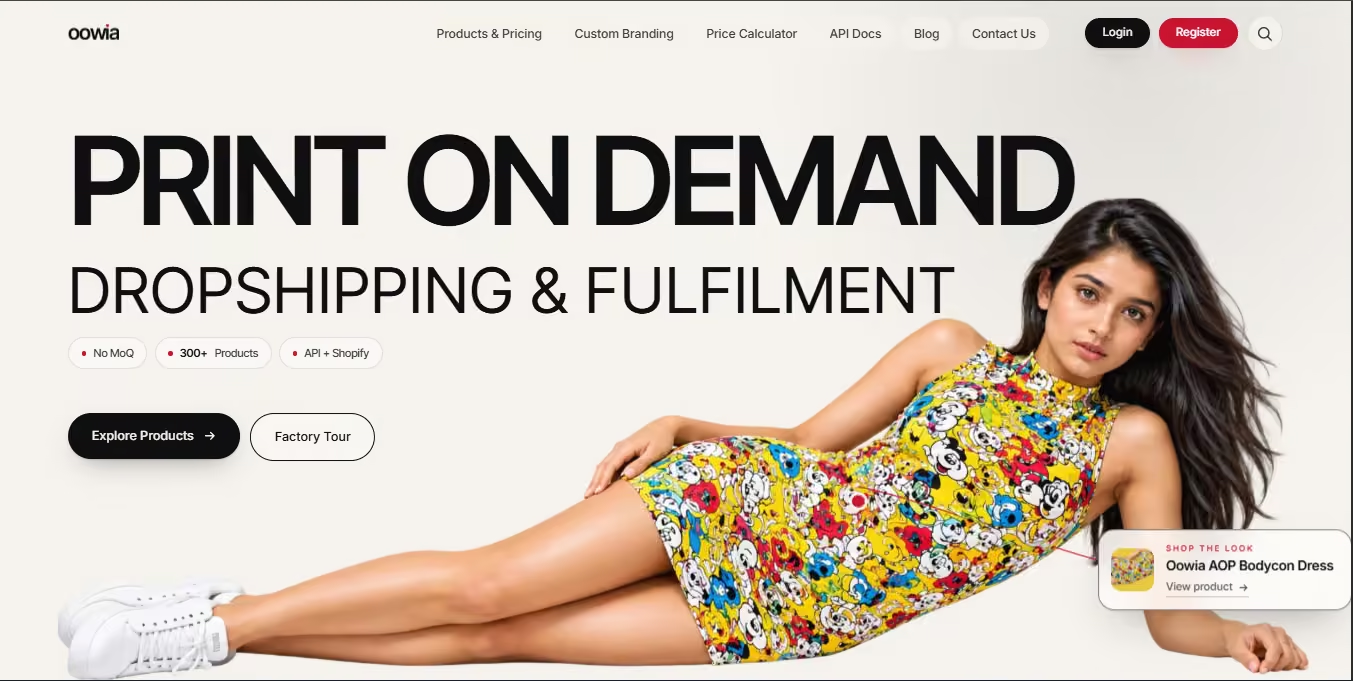
Yes, print on demand works in India. It works for creators testing designs without buying stock, for small teams selling through Instagram, and for B2B buyers who need custom apparel in small runs. The model removes inventory risk. It does not remove the need for a clear niche, reliable printing, and steady marketing.
Why print on demand suits India right now
India has a large and growing middle class, fast digital payments, and shoppers in smaller cities who now buy apparel online. The creator economy adds another layer. Instagram and YouTube creators can turn an audience into a merch drop without storing boxes at home.
Amazon's guide to the no-inventory model explains that print on demand lets a designer upload artwork and print only when an order arrives. That fits a market where trends move quickly and festive drops arrive without much warning. Tier-2 and Tier-3 shoppers are buying online, and UPI has made checkout familiar. For a small brand, a design can travel from a studio in one city to customers in many states without a warehouse. If you are still mapping the basics, this guide on how to start a print-on-demand business in India is a useful next read.
What does print on demand actually mean for a small brand?
Print on demand is a fulfilment model where a product is printed only after a customer orders it, so the seller carries no finished stock. You upload artwork, choose a garment, set a retail price, and the manufacturer prints and ships each order. For a first-time designer, that is a low-risk way to learn what sells. The print-on-demand versus bulk manufacturing comparison is worth reading before you decide how much stock to hold.
Oowia's All Over Printed T-Shirt at ₹388 gives a full-front canvas for bold artwork. A simpler entry point is the Men's Oversized T-Shirt at ₹249, which suits streetwear and slogan drops.
Can small teams really build a serious POD business in India?
Some of Oowia's top customers are tiny teams: two brothers, a husband and wife, two friends. They run operations that bring in around ₹15 lakh in monthly revenue. That figure can sound unreal to a beginner, so look at what sits behind it. It is design selection, repeat customers, and a supplier that delivers the same shade and fit every time.
A duo can handle design, posting, customer replies, and ads. The production side stays with the manufacturer. Oowia's in-house knitting, dyeing, printing, and garmenting help here, because consistency is easier to control when every step sits under one roof. Single-location shipping also means one parcel per order, which saves split-shipment costs and awkward tracking updates. That number will not arrive in month one for most teams. The useful lesson is that the model can support a lean team when product and marketing are tight.
Which niches work best for Indian POD brands?
Passion niches beat generic slogan tees. Regional language humour, festival designs, fitness communities, college batches, fandom art, and cause-led apparel all find buyers. Indian millennials and Gen Z are vocal and opinionated. They use clothing to say something about their city, their language, their fandom, or their beliefs.
A brand built around one of these passions can charge more than a plain tee because the design carries meaning. A simple Instagram test can show which designs get saved, shared, and asked about. A product like the AOP Crop Top at ₹348 can work for a tight, style-led collection. A niche also makes your ads cheaper. When you speak to one community, your reel, caption, and design all point in the same direction.
What does the money look like in the first year?
One Indian POD operator puts beginner profit at ₹2,000 to ₹6,000 a month on 10 to 30 orders. A part-time brand doing 50 to 200 orders may see ₹12,500 to ₹70,000. Full-time operations at 500 to 3,000 orders can reach ₹1.5 lakh to ₹10 lakh or more. These are Indian POD profit ranges, so treat them as planning numbers.
Your own results will depend on pricing, ad costs, returns, and product mix. A simple per-order check helps. If a tee sells at ₹899, product and print may cost ₹280 to ₹350, packaging ₹20 to ₹30, shipping ₹60 to ₹120, and payment plus ops ₹20 to ₹30. That leaves roughly ₹300 to ₹450 before marketing. When margin falls below ₹200, paid ads get difficult. Keep a simple sheet with selling price, product cost, shipping, ad spend, and returns. Update it every week. This habit shows you which products pay for themselves and which ones only look popular.
What separates POD businesses that last from those that stall?
Businesses that last tend to share a few habits. Use this checklist before you scale:
- One clear audience and a repeatable design style
- Samples checked for print placement, colour, shrinkage, and stitching
- A supplier with in-house quality control, because shade variation kills repeat orders
- Pricing that includes shipping, packaging, and returns
- A content plan for reels, stories, and WhatsApp broadcasts
- Small test batches, then more stock only on winners
Oowia's no/low MOQ model lets you start small. Its wide fabric, colour, size, and print range gives you room to test. Before approving a larger run, use this sample quality checklist so you know what to inspect. Consistency matters more than a fancy print technique. A customer who receives the same fit and shade twice is more likely to order again.
How should a beginner start in the first 30 days?
The first month does not need to be complicated.
- Pick one niche and write down 20 design ideas.
- Get 10 designs made or create them yourself, and keep files print-ready.
- Order samples from your POD partner.
- Build a simple store or Instagram shop.
- Run a small ad test or seed samples to creators.
- Track repeat orders and best sellers.
One operator who has sold printed tees since 2017 describes the print-on-demand model in practice as a middle layer between customer and supplier. That is a useful way to see it. You handle the brand and the customer. Your manufacturer handles the print and the parcel. Do not wait for a perfect catalogue. Ten good designs and one clear audience are enough to learn from. If a design sells, repeat it in another colour or garment. If it does not, move on without ordering deep stock.
The honest takeaway
Print on demand works in India when you treat it as a retail business with real customers. It stalls when people upload random designs and wait. Start with a niche you understand, order samples, check quality, and keep your first batch small. Oowia's in-house setup, low MOQ, and wide print options give beginners room to test. The model is real. The results depend on the work.
