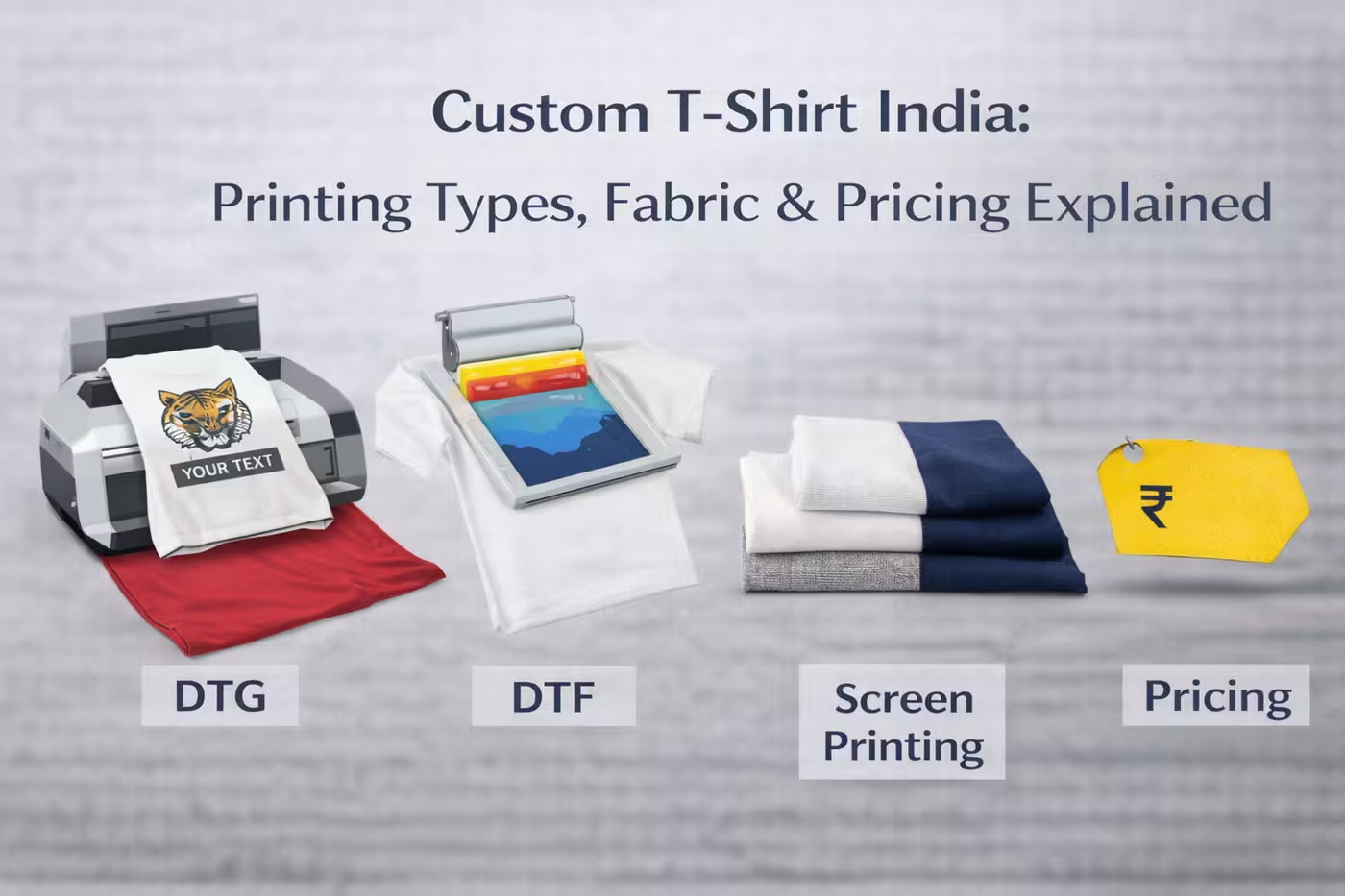
For small batches in India, DTF is usually the most flexible choice, DTG works best for detailed artwork on cotton, and screen printing becomes economical only when the same simple design repeats in larger quantities. The right answer depends on your fabric, design complexity, quantity and budget. This guide explains each method in plain language so you can choose with confidence.
What is DTG printing and when does it shine?
DTG stands for Direct to Garment. A DTG printer places ink directly onto the fabric, in a way that is similar to an inkjet printer working on paper. The design goes straight onto the T-shirt, with no film and no screen in between.
This direct approach gives DTG a soft feel on suitable cotton garments. Ink settles into the fibres, so the print blends with the fabric rather than sitting on top. For photographs, fine line work and smooth gradients, DTG often gives the closest match to the original file. Kornit explains that DTG excels at intricate, full colour designs with minimal setup, which suits custom apparel and on demand production Kornit Digital guide to DTG printing.
DTG suits one off pieces and very small runs. There is no screen to prepare, so artwork can change from garment to garment. A birthday T-shirt, a single sample for a new collection, or a premium cotton tee with a detailed illustration can all work well.
There are limits to keep in mind. DTG performs best on cotton and cotton rich fabrics with a smooth surface. Dark garments often need pretreatment before printing, which adds a step and a consumable cost. Polyester heavy fabrics usually behave differently, so DTG should never be assumed to work on polyester in the same way as on cotton. Per unit cost also rises for larger runs of identical prints, where another method may price better.
If you are a fashion designer testing a premium cotton design, DTG lets you see fine detail clearly on a single sample. If you are a working professional starting a side hustle, DTG lets you launch one design without committing to stock. The soft finish can feel special, and that feeling matters when customers judge quality by touch.
What is DTF printing and why is it popular in India?
DTF stands for Direct to Film. The design is printed onto a special film, adhesive powder is applied and cured, and the finished transfer is then bonded to the garment with a heat press. The printer never prints directly onto the T-shirt during the first stage.
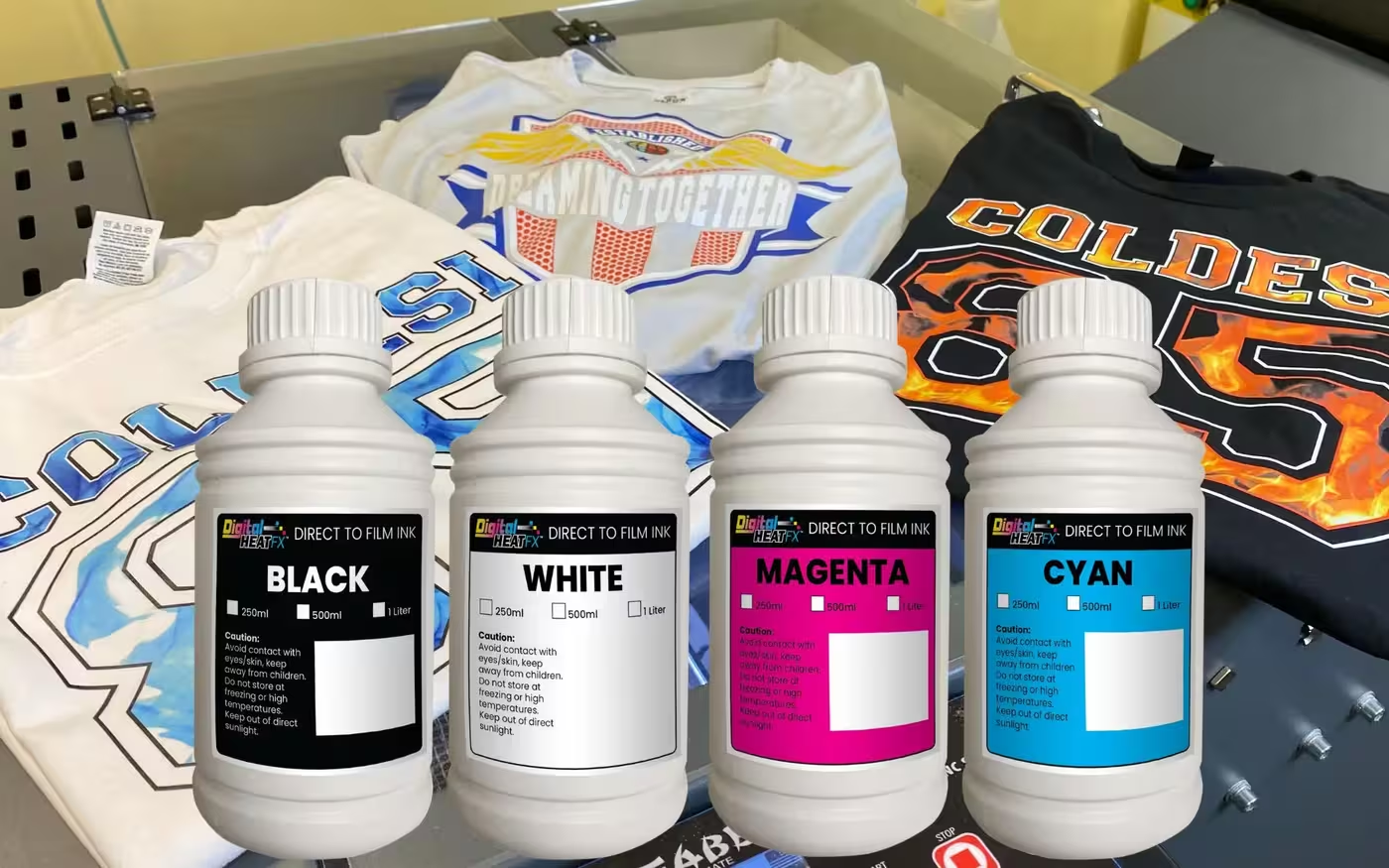
That two stage process gives DTF wide fabric compatibility. Cotton, polyester, blends and dark fabrics can all be handled in the same workflow, subject to testing the specific garment. Full colour logos apply cleanly to dark garments, and small text, gradients and vibrant colours reproduce well. Kapricorn Prints notes that DTF handles multicolour, detailed artwork including small text and gradients, and works on cotton, polyester and blends Kapricorn Prints comparison of DTF, DTG and screen printing.
For small batches, DTF has a practical advantage. There is no screen setup cost, so a run of one can be economical. Every garment can carry a different name, number or design without extra setup. Transfers can also be printed in batches and pressed later, which helps when orders arrive across a week rather than all at once.
The feel is different from DTG. DTF creates a bonded transfer layer, so a large solid design can feel heavier and slightly less breathable. Smaller logos usually feel lighter. Film, ink, adhesive quality, curing, press temperature and pressure all affect the final result, which is why a good production setup matters.
Many Instagram brands in India start with DTF for this mix of flexibility and price. A creator can test ten designs on mixed colours, keep the winners and drop the rest. A B2B buyer ordering staff T-shirts in different sizes can also change placement or personalisation piece by piece. The method fits the way small orders actually arrive, with variation from piece to piece.
What is screen printing and where does it still win?
Screen printing pushes ink through a prepared mesh screen onto the garment. Each colour normally needs its own screen. That setup work happens once, then the same design reproduces efficiently across a large quantity.
Screen printing is the oldest of the three methods and remains trusted for bulk work. Prints can be very durable, and unit cost falls sharply as quantity rises because setup cost spreads across more garments. For a simple logo repeated on hundreds of uniforms, screen printing often gives the lowest cost per piece.
The same setup logic creates the main limit for small batches. A single T-shirt still needs screens, so the cost per piece becomes high. Designs with many colours, photographic gradients or artwork that changes between garments also become complex, because each colour and each variation adds work.
Screen printing also offers strong spot colour control. Corporate brands that need an exact brand colour often prefer screen printing for that reason. Specialty inks can also be used for effects, and cured prints can handle heavy washing in uniform and workwear settings.
For a dealer buying for resale, screen printing makes sense when a design has already sold and the next order repeats it in volume. For a college fest or event team ordering the same design for everyone, screen printing can be efficient once quantity is high enough. For a first test of five different designs, screen printing usually asks for too much commitment.
DTG vs DTF vs screen printing at a glance
The table below summarises the main differences in a form that is easy to scan. Use it as a starting point, then check fabric, artwork and quantity for your exact order. Gelato sets out a similar economic view, noting that each method has a different cost curve against run length and a different setup burden Gelato comparison for apparel shops.
| Factor | DTG | DTF | Screen printing |
|---|---|---|---|
| Best quantity | One piece to small runs | Small to medium runs | Medium to large runs |
| Fabric range | Best on cotton | Cotton, polyester and blends | Wide range with correct ink |
| Design detail | Excellent for photos and gradients | Very good for full colour art | Best for simple spot colours |
| Print feel | Soft and integrated | Thin transfer layer | Depends on ink and coverage |
| Setup | No screens | No screens | One screen per colour |
| Personalisation | Good | Excellent | Less convenient per piece |
| Dark garments | Often needs pretreatment | Works well | Works well with opaque ink |
A few patterns stand out. DTG wins on softness and fine detail on cotton. DTF wins on fabric range and per piece flexibility. Screen printing wins on unit cost and durability at volume for repeated designs. No method wins on every factor, which is why experienced producers often run more than one method in house.
Oowia runs printing under one roof, with knitting, dyeing, printing and garmenting handled in a single facility. That vertical setup helps with quality control and consistency, because the process does not depend on outside vendors for each stage. The company is owned by Ambuja Knitting Mills, a 70 year old B2B knitted fabric manufacturer, which gives the production side a long heritage in fabric. For a small brand, that structure can mean shade, sizing and print quality stay more consistent from sample to repeat order.
Which method is best for small batches in India?
Small batches usually mean quantities from one piece up to a few dozen, with designs that may change often. In that range, digital methods have an advantage because there is no screen setup to recover. The choice then comes down to fabric and design.
Choose DTG when the garment is cotton, the artwork is photographic or highly detailed, and softness matters. A premium cotton T-shirt with a watercolour illustration is a classic DTG case. A gift order with a photo print also fits, because detail and a soft finish are the priority.
Choose DTF when the order mixes fabrics or colours, when garments are dark or polyester based, or when each piece carries different text. Sports jerseys, staff T-shirts with names, and colourful Instagram drops often land here. DTF also suits a small brand that wants to test many designs without paying setup for each one.
Choose screen printing for a small batch only when the design is simple, the colours are few, and the same design will repeat soon. A two colour logo for a team of thirty may be worth quoting both ways. A six colour design for ten pieces will rarely justify screens.
Price sensitivity matters in India, and fabric choice matters too. Cotton, cotton poly blends and hosiery fabrics are common, and each reacts differently to ink, heat and pretreatment. A method that works beautifully on one blank can disappoint on another. That is why sample testing on the exact garment you plan to sell is worth the time.
If you want a broader view of how print on demand works before you commit, read how to use print on demand services in India and match the method to your product plan.
How fabric, colour and design change the answer
Fabric is often the deciding factor. Cotton gives DTG its best results, especially when the surface is smooth and the garment quality is good. Rough or heavily textured cotton can reduce print clarity. DTF is less limited by fabric composition, which helps when an order includes polyester, blends or performance fabrics.
Polyester needs care across all methods. Dye migration, heat sensitivity and surface coatings can affect the result. DTF and screen printing with the correct ink system are the usual candidates for polyester. DTG on polyester is possible in specific cases, yet it should be tested rather than assumed.
Garment colour also changes the process. Dark fabrics need a white underbase so colours stay visible. DTG often needs pretreatment on dark garments, which adds time and cost. DTF includes white ink in the transfer, so dark garments are handled without a separate pretreatment step on the garment itself. Screen printing uses opaque ink for strong colour on dark fabrics.
Design complexity matters just as much. Photographs, gradients and full colour illustrations suit DTG and DTF. Simple logos with one or two solid colours suit screen printing at volume. Small text needs a high resolution file, and a logo sent as a compressed screenshot will blur when enlarged. Vector files or high resolution artwork give the printer a clean starting point.
Print size and placement also affect feel and cost. A small chest logo feels lighter than a large front print. A front and back print costs more than a single location print. Large solid areas can affect breathability, so breaking up a solid background or choosing a lighter method can improve comfort. These details sound small, yet they shape how a customer experiences the final garment.
What do small batches cost in India?
Cost depends on method, quantity, print size, number of locations, fabric, colour count and personalisation. A front chest logo is priced differently from a large front and back print. Garment cost is usually separate from printing cost, and tax, packing and delivery add to the final figure.
Indian market guides give a useful sense of range. Printonn lists DTG at Rs 350 to Rs 700 per T-shirt for a single piece, DTF at Rs 180 to Rs 350 per T-shirt, and screen printing at Rs 70 to Rs 150 per T-shirt for quantities of 100 and above Printonn guide to custom T-shirt printing in India. Those ranges cover printing in different setups, so treat them as directional rather than fixed quotes for your exact job.
The pattern behind the numbers is clear. Screen printing is cheapest per piece at bulk volume. DTF offers a strong balance for small quantities. DTG carries a higher per piece cost, especially on dark garments where pretreatment adds to the process. As quantity rises for a repeated design, screen printing becomes more attractive. As design complexity rises, digital methods become more attractive because screen setup grows with each colour.
For a small brand, the cheapest method on paper may not give the best result for the artwork or fabric. A low price that leads to returns, poor reviews or reprints can cost more than a slightly higher price with a better finish. Ask for a sample on the exact garment, check wash behaviour, and compare total cost including garment, printing, tax and delivery.
Oowia offers a wide range of fabric types, colours, sizes and printing methods, including DTG, DTF, all over print, vinyl, puff print, screen print, HD prints and glow in the dark prints. That range helps when a design needs a specific technique rather than a one size approach. The catalogue includes the Men's Normal Cotton T-Shirt, Rs 159, which gives new brands an accessible cotton blank to test with.
Which method suits your kind of brand?
Entry level fashion designers often start with samples. DTG helps test detailed artwork on cotton, while DTF helps test colourful designs across different blanks. Ordering one sample in each method on the same design can teach you more than any guide, because you can compare feel, colour and wash behaviour side by side.
Instagram and influencer driven creators need speed and variety. DTF suits short drops with vibrant designs and mixed colours. A creator can launch a small collection, watch sales, then reorder winners in larger quantities. Trend refreshment matters here, and digital methods let you update designs without new screens. For ideas on keeping a catalogue fresh, see why trend and design refreshment matter for POD brands.
B2B buyers ordering for staff or uniforms should focus on quantity and repeat design. A small team with a colourful logo may suit DTF. Hundreds of identical uniforms with a simple logo may suit screen printing. Plan the size breakdown, logo placement, garment colour, packing and delivery schedule before production, because missing size counts cause delays.
Dealers and wholesalers buying for resale should think about repeat orders. A design that sells well will be reordered, and screen printing may become economical at that stage. Keeping artwork files, garment details and print specifications organised makes reordering smoother. Single location shipping also helps, because orders arrive as one parcel rather than split shipments.
Working professionals starting a side hustle need low risk testing. Print on demand with no or low minimum order quantity lets you start with one piece. DTF and DTG both support that model. You can validate demand, learn about sizing and fit, and build a small audience before holding stock. When you are ready to grow, learn how to scale your POD fashion brand in India with Oowia and plan the next step with real sales data.
A simple step by step guide to choosing
Use this checklist for every small batch order. It takes a few minutes and prevents most common mistakes.
- Confirm the garment fabric and colour, and check whether the blank is cotton, polyester or a blend.
- Decide the quantity and whether every piece carries the same design or different names and numbers.
- Review the artwork for colour count, detail level, small text and gradients.
- Note print size, placement and number of locations on the garment.
- Shortlist one or two methods based on fabric, design and quantity.
- Order a physical sample on the exact garment before approving a larger run.
- Check feel, colour accuracy, stretch behaviour and wash care on the sample.
- Confirm total cost, delivery timeline and packing before production starts.
If two methods look suitable, ask for a sample or test print in both. That small investment can save a full production run. Keep the sample, the artwork file and the garment details together, so reorders match the approved result.
Quality control matters at this stage. In house production from fabric to finished garment helps with consistency, because shade variation and sizing issues are easier to control when each step stays under one roof. Faster turnaround also helps small brands, because everything happens in a single location rather than moving between vendors. For help finding a reliable partner, read how to find the right POD supplier for your brand.
Common mistakes that waste money on small orders
Selecting a method only by price is a frequent error. The cheapest option may struggle with the fabric, the design or the expected wash cycles. Match the method to the job first, then compare price within suitable options.
Sending low resolution artwork causes blurred prints. Screenshots and messaging app compressed files lose detail. Send vector files for logos or high resolution files for photographic art, and confirm the print size in centimetres or inches.
Skipping print dimensions creates confusion. A note that says logo on the front is not a specification. Approve width, height and placement with a mockup or sample. That step protects both you and the producer.
Assuming every fabric prints the same way leads to surprises. Cotton, polyester, blends and performance fabrics react differently to ink, heat and pretreatment. Test the exact blank, especially when the fabric has coatings, unusual dyes or stretch.
Skipping a sample on bulk orders adds risk. Approving garment, colour, print size and method before full production reduces the chance of a costly mistake. Care also matters after delivery. Turn garments inside out before washing, use a gentle cycle, avoid harsh bleach, and avoid ironing directly over the print. Follow the care instructions for your specific garment.
Frequently asked questions
Which printing method is cheapest for small batches in India?
DTF is usually the most economical digital option for small batches, while screen printing becomes cheapest at higher quantities for repeated designs. DTG tends to cost more per piece, especially on dark garments.
Is DTF durable in Indian weather and washing?
Good quality DTF prints can last through many washes when produced and cared for properly. Print life depends on film, ink, adhesive, curing, press settings, garment fabric and wash care, so a sample test on your exact blank is wise.
Which fabric works best for each method?
Cotton suits DTG well for soft, detailed prints. Cotton, polyester and blends suit DTF across a wide range. Screen printing works across many garment types with the correct ink system, and is strong for cotton basics at volume.
Which method is best for dark T-shirts?
DTF is a strong choice for dark garments because the transfer includes white ink and works across fabric types. Screen printing also gives strong colour on dark fabrics for simple designs at volume. DTG can work on dark garments with pretreatment.
Can I print just one T-shirt?
Yes, DTG and DTF both support single piece orders. Screen printing needs screen setup regardless of quantity, so it is rarely practical for one piece.
Which method is best for photographs and gradients?
DTG and DTF both handle full colour artwork well. DTG is often chosen for photographic designs on cotton where softness matters. DTF is chosen when fabric range and cost matter more.
Which method suits names and numbers on every piece?
DTF is especially practical for per piece names, numbers or artwork, because each variation carries no extra screen setup. DTG also handles variation well on suitable cotton garments.
Closing takeaway: pick the method that fits the order
There is no single best printing method for every small batch in India. DTF offers flexibility across fabrics, colours and personalisation at a sensible price. DTG offers softness and fine detail on cotton for premium pieces. Screen printing offers low unit cost and durability when a simple design repeats in volume.
Start with fabric, design and quantity. Test on the exact garment. Keep artwork files and specifications organised for reorders. With that approach, a small batch becomes a low risk way to learn what your customers love, and a solid base for growing a brand step by step.
